The Eurodollar Explained: Why the US Can't Control Its Own Dollar
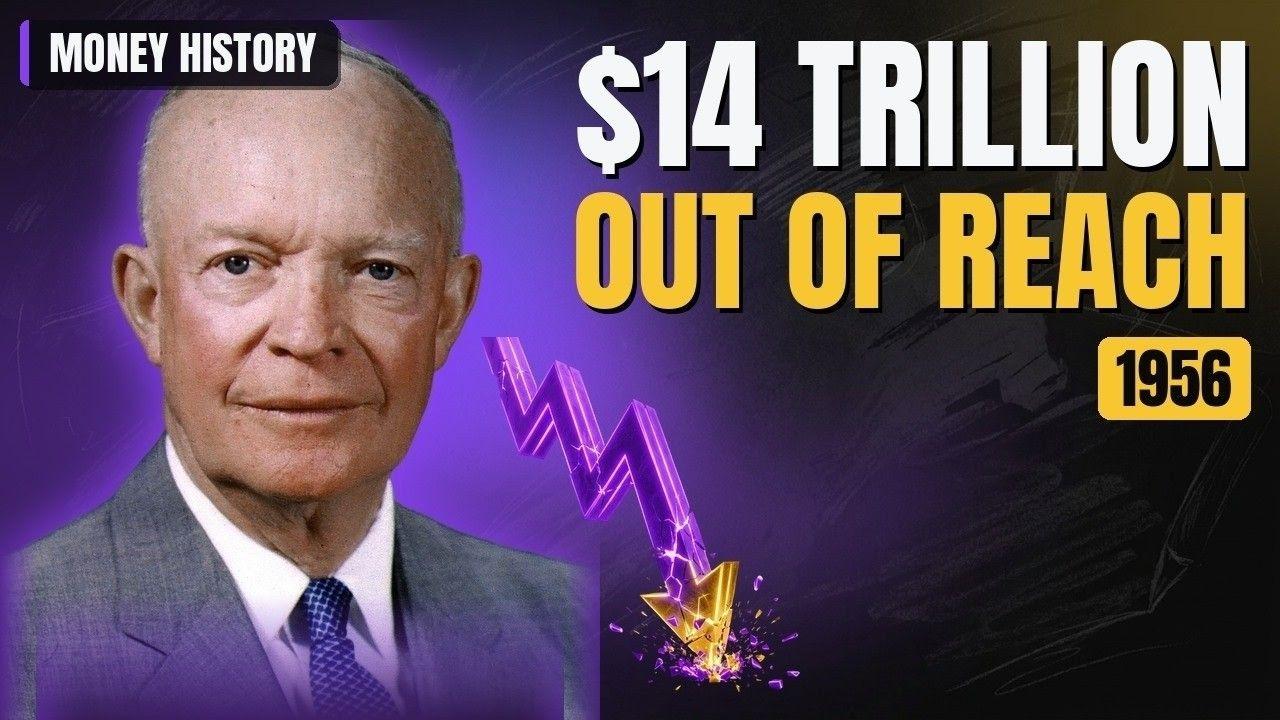
In November 1956, the United States pushed its closest ally toward a currency crisis without firing a shot. It simply refused to help. Britain gave in within weeks. At the same time, London bankers were learning a trick that would outlive the British Empire: holding dollars that America could not reach.
Today, companies and governments outside the US owe about $14.7 trillion in dollar debt through that offshore system, and Washington does not control it.
Watch the 12-minute version
Advertisement
The short answer
Most dollars used in global finance are not held inside America. They sit in banks in London and elsewhere, a system known as the eurodollar market. It grew by accident in the 1950s, driven by US interest rate rules and Cold War fears. America can still squeeze countries through the dollar, but each squeeze pushes more of the system out of its reach.
The Suez Crisis: when the dollar became a leash
- November 1956: British and French troops hold the banks of the Suez Canal. In one month Britain loses $279 million of reserves and falls below the $2 billion level the Treasury had promised to defend.
- The US position: no help from the International Monetary Fund until the fighting stops and the troops leave.
- November 6: Eisenhower tells Prime Minister Anthony Eden to accept a ceasefire without conditions. Eden agrees.
- December 3: Britain announces its withdrawal. A week later the IMF approves $1.3 billion, its largest rescue up to then.
- January 1957: Eden resigns.
The odd part: Britain was not expected to spend the money. It existed to be seen, to restore confidence in the pound.
How the eurodollar market started
The Cold War played a part. In December 1950, after China entered the Korean War, Washington blocked Chinese and North Korean assets under American control. Eastern bloc banks began keeping their dollars in London and Paris instead.
But Bank of England archives point to something duller. In 1955, Midland Bank in London started taking US dollar deposits and paying 1 7/8%. US rules, known as Regulation Q, capped the interest American banks could pay on deposits, and the rate on offer there was about 1%. London simply paid more. Midland swapped the dollars into pounds, which cost it about 4%, cheaper than the 4.5% bank rate.
Then the rules piled up:
- September 1957: after another run on the pound, London banks are barred from lending sterling to finance other countries' trade, so they lend dollars instead.
- December 1958: European currencies become freely convertible again, which the Bank of England later called an essential reason the market grew.
- 1963 and 1965: Washington taxes foreign bonds and limits US banks' foreign lending. Each rule pushes more business to London, and American banks open London branches.
Economist Charles Kindleberger later described the market as something that came into being by accident. The rate banks charged each other for these dollars became LIBOR, a London-set price behind loans around the world. Its last US dollar settings were published on June 30, 2023.
Why offshore dollars are a risk
Offshore dollars are borrowed and lent without the Federal Reserve. But when they panic, only the Federal Reserve can create the dollars to calm things down. Beyond the $14.7 trillion of debt, another $80 trillion or more in dollar payments is promised through currency swaps.
Sanctions and the dollar today
The old weapon never went away. In 2012 Iran's banks were cut off from SWIFT. In 2022, after the invasion of Ukraine, about $300 billion of Russia's central bank reserves were frozen. Most of it was not in America: around $200 billion sat at one clearing house in Belgium, and only about $5 billion was in the United States.
The targets reacted as London did decades earlier. Russia built its own messaging system, China built its own payment network, and central banks bought more than 1,000 tonnes of gold in 2022 alone.
Is the dollar losing its power?
Not as a currency. The dollar still sits behind most of the world's reserves and almost 9 in 10 currency trades, and rival systems are growing from a small base. What changes is control. Each time the dollar is used as a weapon, more of it moves to places Washington does not run. London still handles about 38% of the world's currency trading. Money does not have a flag. It follows incentives.
FAQ
What is a eurodollar? A US dollar deposit held in a bank outside the United States. It has nothing to do with the euro currency.
Why did the US refuse to help Britain during the Suez Crisis? Washington opposed the invasion and blocked IMF support until Britain agreed to a ceasefire and withdrawal.
Where were Russia's frozen reserves held? Of roughly $300 billion frozen in 2022, about $200 billion sat at a clearing house in Belgium and only about $5 billion in the US.
Is the US dollar still the world's reserve currency? Yes. It backs most global reserves and is on one side of almost 9 in 10 currency trades.
This is education, not financial advice.
Advertisement