East India Company in Bengal: How Trade Became Conquest
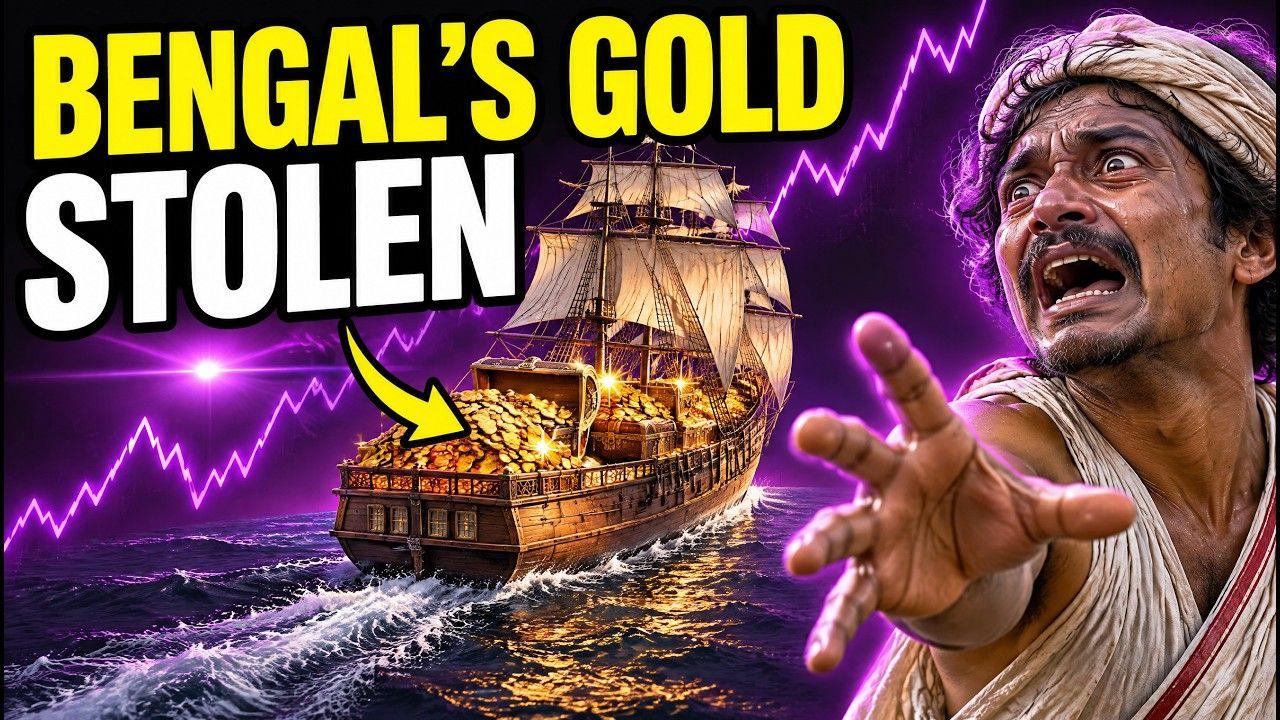
Around 1750, India is commonly estimated to have produced close to a quarter of the world's manufacturing output. Britain was closer to 2%. Bengal was not a poor land waiting to be discovered. It was rich, and a trading company found a way to turn that wealth into rule.
Watch the 3-minute version
The short answer
The British East India Company arrived in Bengal as a trader. After winning the Battle of Plassey in 1757 and gaining the right to collect Bengal's revenue in 1765, it became a government that taxed the region to pay for its army and protect its profits. The famine of 1770, often estimated to have killed around 10 million people, showed the human cost of that system.
Advertisement
How rich was Bengal before British rule?
Bengal's economy ran on rivers and cloth. Rivers moved grain. Workshops moved textiles. Old Dhaka was not a remote village but a hub in a river and ocean trading network, where merchants, weavers, brokers and rulers all understood that cloth could move power.
The most famous product was Dhaka muslin. It was so fine it looked like magic, because the labour behind it was almost invisible: thread by thread, by hand. Royal courts created demand for it, demand created leverage, and the weaver became part of a political and economic machine long before any foreign company learned to seize it.
East India Company timeline in Bengal
The video reads the key dates like a ledger:
- 1600: The East India Company receives its charter, as a trading company.
- 23 June 1757: The Battle of Plassey. Company forces under Robert Clive defeat the Nawab of Bengal.
- 1765: The Company gains revenue rights, known as the diwani, under the Treaty of Allahabad, signed on 16 August that year.
- 1770: The Bengal famine, often estimated at around 10 million deaths.
Four entries, one transformation: trade becoming rule.
How trade turned into extraction
Europe first wanted the cloth. Then it wanted the trade route, then the contract, then the right to set the price. Desire became paperwork, and paperwork became coercion.
The real switch came in 1765. With revenue rights, Bengal was no longer only a market to buy from. It became a territory to tax. The loop was simple and brutal:
- Textile wealth became tax revenue.
- Tax revenue paid for army power.
- Army power protected profit.
Once that loop closed, extraction no longer looked like theft. It looked like administration. The Company did not need to wear a crown. After Plassey it had learned an old lesson of empire: profit is safer when soldiers stand behind it.
What happened to Bengal's weavers?
The decline of Bengal's looms was not one dramatic moment. Weavers were squeezed by prices, taxes, debt and fear. The sound faded slowly, until a whole industry came to be remembered as if it had vanished by accident.
Then came the famine of 1770. The key point in the video is not only the number of deaths but the fact that extraction kept moving while villages broke.
Surviving pieces of muslin now sit behind museum glass. They can look harmless there, but they are evidence. They show that refined skill existed in Bengal before the empire claimed civilisation as its own. In the video's words, the weaver is not a side character. The weaver is the source code. Skill came first, accounting came later, and the empire placed itself between the two.
Why this history still matters
Bengal's story is about what happens when a business gains the power to govern. When commerce writes the rules, profit stops being an outcome and becomes the law. Violence gets renamed as policy. It is worth remembering whenever a company becomes powerful enough to shape the rules it operates under.
FAQ
How did the British East India Company take control of Bengal? It won the Battle of Plassey in 1757, then gained the right to collect Bengal's revenue in 1765 and used that revenue to fund its army.
What was the diwani? The right to collect land revenue and taxes. The Company received it for Bengal in 1765 under the Treaty of Allahabad.
How many people died in the Bengal famine of 1770? It is often estimated at around 10 million deaths.
What was Dhaka muslin? An extremely fine handwoven cotton cloth from Bengal, prized as a luxury across the world.
Advertisement