1973 Oil Crisis Explained: Why America Ran Out of Gas
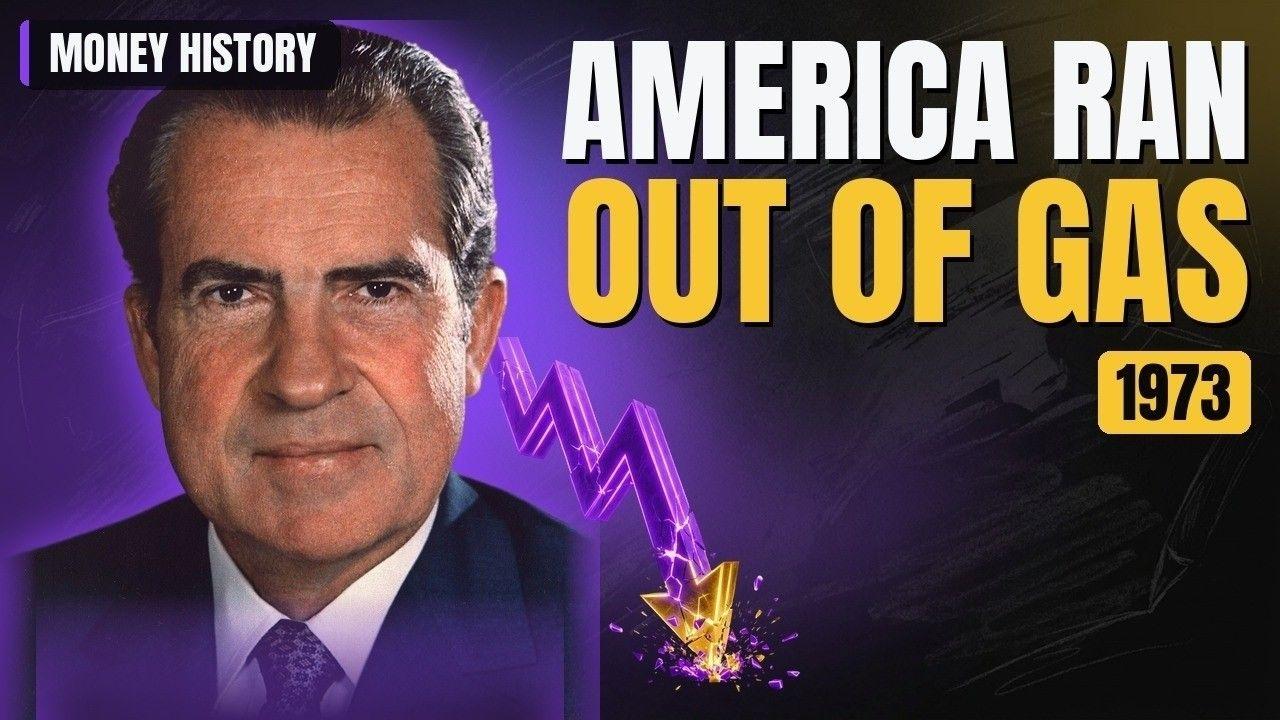
In February 1974, the lines for gasoline in Maryland stretched five miles. Drivers waited for hours. Yet the world had lost only about 9% of its oil, and nobody knew even that at the time.
So why did America run out of gas? The answer has as much to do with rules and fear as with oil.
Watch the 8-minute version
Advertisement
The short answer
The 1973 Arab oil embargo cut a real but modest share of world supply. America made it far worse. Its spare oil capacity was gone, fuel prices were capped by law, and a slow federal formula sent gasoline to the wrong places. When people saw shortages, they panicked and topped up, which emptied the pumps even faster.
How America lost its oil insurance
For decades, a Texas state commission kept oil wells pumping below what they could produce. That unused capacity was the world's insurance policy. When Arab producers tried an embargo in 1967, it misfired, because America simply pumped more.
In 1971, with world demand surging, Texas lifted the limits. Every well ran at 100%. The insurance policy was gone. By 1973 America imported more than a third of its oil, and by that autumn world spare capacity was down to about 1%.
1973 oil crisis timeline
- October 6, 1973: Egypt and Syria attack Israel on Yom Kippur. Israel runs short of weapons and the United States launches an airlift. Crosswinds over the Azores delay the planes, so they land in broad daylight where everyone can see.
- Ten days into the war: OPEC raises the price of oil by 70%.
- The next day: Arab producers agree to cut output 5% a month and to cut off the United States and the Netherlands completely.
- January 1974: A barrel that cost $2.90 before the embargo now costs $11.65.
- March 1974: The embargo is lifted. The higher prices stay.
Why the gas lines happened
Europe and Japan had stockpiled oil, which gave them a short cushion. America had price caps and a federal allocation system that decided where gasoline went. The formula could not move fast enough. Some areas ran dry while others had more than they could sell. Because the price could not rise, people paid in time instead.
Stations hung flags: green for gas, yellow for rationing, red for go home. Some states rationed by licence plate, odd numbers on odd days and even numbers on even days. Then fear took over. Drivers with half a tank joined the line anyway, because tomorrow the flag might be red. Every top-up drained the pumps faster.
Economists know this pattern from bank runs. Historian Meg Jacobs put it plainly: "Americans' fear turned a small interruption in supply into a major crisis."
To be fair, panic is not the whole story. The dollar had been devalued in 1971 and 1973, cutting what OPEC earned per barrel, and inflation was already running hot. The Federal Reserve's own history calls the embargo one of many complicating factors. Not everyone lost, either: The New York Times reported Exxon's 1973 profits up 59%.
What 1973 built
The crisis left a national 55 mph speed limit, fuel economy standards and a new International Energy Agency. In 1975 President Ford signed the law creating the Strategic Petroleum Reserve, oil stored for the next emergency. Between 1975 and 1988 the average American vehicle went 81% further on a gallon. The lines still came back in 1979 after revolution in Iran.
Why it is happening again in 2026
On February 28, 2026, war began between the United States, Israel and Iran. Iran effectively closed the Strait of Hormuz, which carried about a fifth of the world's crude oil and liquefied gas. Brent crude is back above $100 a barrel, more than 40% above its pre-war level, and the G7 agreed to release up to 100 million barrels from the emergency reserves 1973 built. In October, thousands of drivers in South Africa rushed to fill up before a price rise.
A Reuters columnist argues the new problem is logistics: shipping now makes up about 27% of the delivered price of a barrel, up from about 3% in January. In 1973, oil was stuck behind a federal formula. In 2026, it is stuck behind a shipping bottleneck. Either way, the oil exists. It just cannot get to where the fear is.
FAQ
What caused the 1973 oil crisis? An Arab oil embargo during the Yom Kippur War, on top of vanished spare capacity, US price controls and panic buying.
How much did oil prices rise in 1973? From $2.90 a barrel before the embargo to $11.65 by January 1974.
What was odd-even gas rationing? Cars with odd-numbered plates could buy fuel on odd days and even-numbered plates on even days.
Why was the Strategic Petroleum Reserve created? To store oil for emergencies after the embargo. It was set up by a 1975 law.
This is education, not financial advice.
Advertisement